
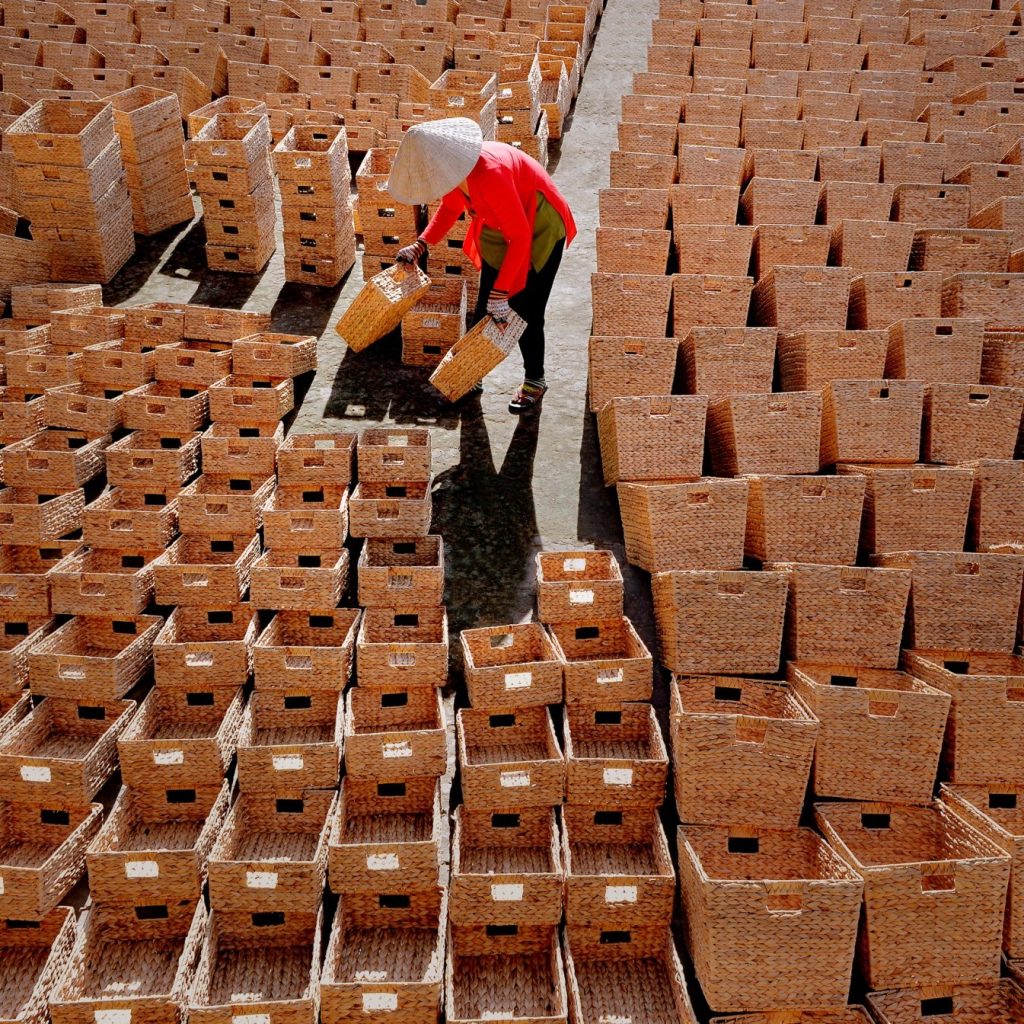
Vietnamese-made handwoven (also called “wicker’) baskets, crafted from natural materials such as rattan, seagrass, water hyacinth, palm leaves, and bamboo, serve a wide variety of applications across homes, businesses, and lifestyle contexts. Their appeal lies in their versatility, natural texture, eco-friendliness, and compatibility with global design trends. As demand for sustainable and artisanal products continues to rise, these baskets are becoming increasingly popular not just as storage tools, but as decorative and multi-purpose items.
One of the most widespread uses of Vietnamese baskets is in home organization and storage. They are commonly used to organize clothes, towels, toys, books, and pantry goods in various parts of the home—from bedrooms and bathrooms to kitchens and closets. Their breathable structure makes them ideal for storing natural fabrics and household items, while their appearance brings warmth and elegance to everyday utility. Woven laundry hampers, wardrobe baskets, and under-bed bins are popular choices in this category, especially among customers seeking alternatives to synthetic plastic containers.
Beyond function, these baskets also serve as decorative elements. In modern interior styling, especially in bohemian, rustic, Scandinavian, and Japandi-inspired homes, baskets are used to create visual texture and warmth. They are placed on shelves, floors, and tables, or even mounted on walls as natural art. Woven planters are especially in demand, serving both aesthetic and functional purposes by housing potted plants and adding an organic touch to indoor greenery. Although most baskets are not waterproof, they are often paired with plastic liners or used as decorative covers for ceramic or plastic pots.
Vietnamese baskets are also widely used in kitchen and dining settings, especially in eco-conscious households and the hospitality sector. They are commonly used as bread baskets, fruit holders, tabletop organizers, and serving trays. Restaurants, cafes, and hotels that emphasize sustainability often incorporate these baskets into their food presentation and buffet displays. The rustic yet refined look of handwoven products makes them ideal for enhancing the dining experience while reinforcing a natural, sustainable brand image.
In the gifting and retail space, these baskets play an important role as packaging and display vessels. Retailers and event organizers frequently use them to present seasonal gift hampers—such as for Christmas, Lunar New Year, or corporate events—or to display goods in stores. Natural-fiber baskets elevate the perceived value of the contents inside and offer the recipient a reusable item, making them particularly well-suited for wellness, spa, gourmet, or craft-themed gifts.
Another growing application is in baby and nursery storage. Parents increasingly seek non-toxic, soft-sided storage options for baby clothes, toys, diapers, and blankets. Water hyacinth and seagrass baskets, often lined with fabric for added softness, are used in nurseries and children’s rooms for both function and aesthetics. Moses baskets made in Vietnam, typically woven with padded inserts and handles, are also gaining popularity in overseas markets as a portable bassinet option.
Vietnamese baskets are also making inroads into fashion and lifestyle accessories. Large woven totes, beach bags, market baskets, and picnic hampers are being produced in a variety of shapes and designs, sometimes incorporating leather handles, cotton linings, or fabric closures. These items appeal to consumers who value craftsmanship and sustainability in their everyday carry items.
Finally, baskets are now being integrated into furniture design. Major furniture retailers source basket drawers and bins from Vietnam for modular shelving units, TV stands, and under-bed storage systems. The combination of wood furniture frames with removable natural-fiber baskets blends functionality with a warm, rustic charm. This integration also reflects a broader trend of flexible storage solutions in compact urban living spaces.
In all these applications, Vietnamese handwoven baskets stand out not just for their craftsmanship and material sustainability, but for their adaptability to modern living. Whether used in homes, hotels, shops, or outdoor settings, these baskets provide practical value while enhancing the aesthetics of the space—making them a key export product and a symbol of Vietnam’s artisan heritage.