
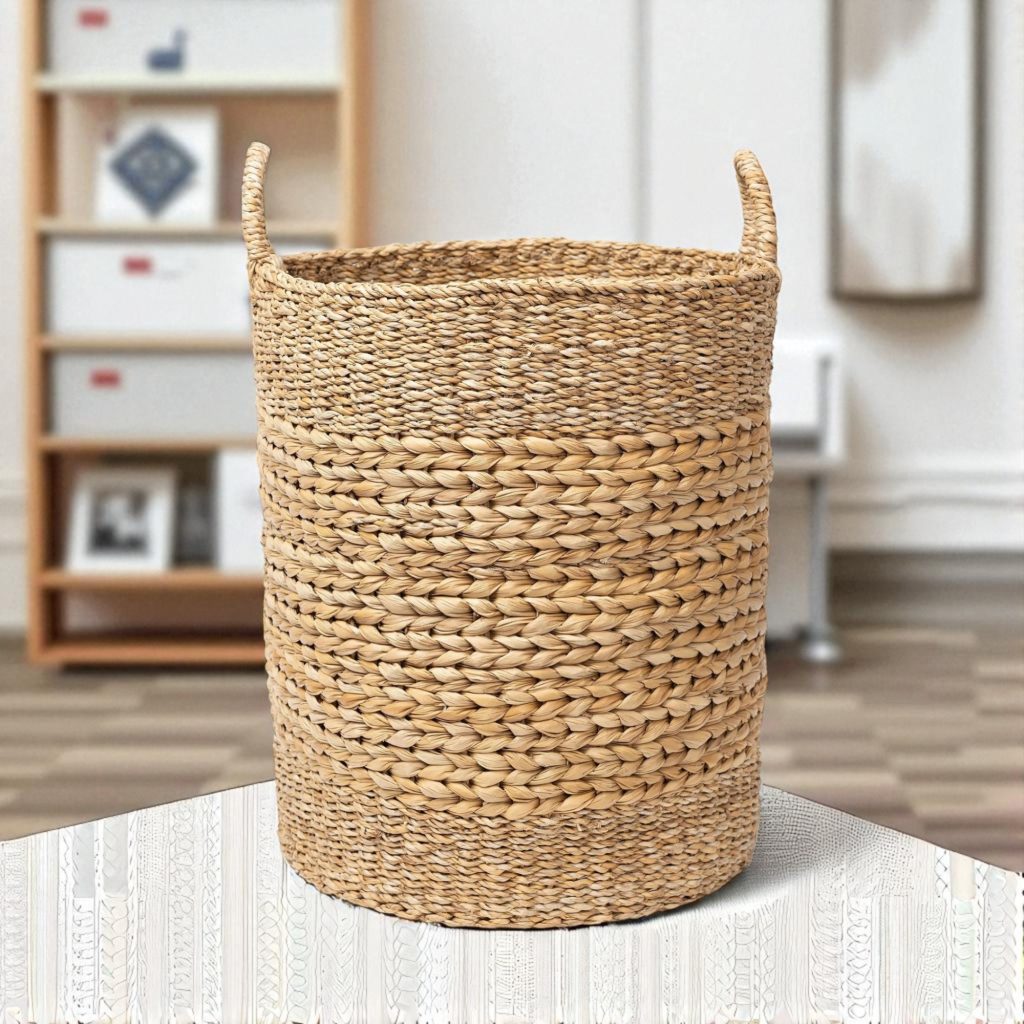
Vietnam is becoming a true manufacturing hub of global wicker homeware products. With rattan being increasingly short in supply, water hyacinth and seagrass predominate more and more in the wicker homeware industry. But how much do they resemble and how do they perform in making homeware products for global consumption?
Water hyacinth and seagrass differ in their physical properties and resulting aesthetics. Water hyacinth is characterized by its larger, softer, and wider stems, leading to a warmer, golden-brown color and a more substantial feel in finished products. Seagrass, on the other hand, has a smaller diameter, a more rigid texture, and a greenish-khaki or beige tone that matures over time. These differences in texture and color result in distinct decorative vibes and visual appeal for woven items like baskets and storage solutions.
| Water Hyacinth | Seagrass | |
| Stems | Larger, wider, and softer than seagrass. | Smaller diameter and a more rigid texture. |
| Color | Golden brown exterior, often favored for its warm tones | Greenish undertones that gradually fade to khaki or beige. |
| Texture | Softer and more yielding to the touch | Has a smooth, somewhat shiny surface. |
| Visual Impact | Generally creates a softer, more substantial look in homewares | Creates a more rustic and natural appearance. |
| Durability | Known for its resilience and ability to withstand wear and tear, making it suitable for high-traffic areas and families | While durable, it may be more susceptible to discoloration from uneven color absorption due to its natural oil surface. |
| Color Fastness | Water hyacinth tends to retain dye (color coating) better than seagrass. | May experience uneven color adherence when dyed or color-coated. |
| Moisture concern | Highly susceptible to moisture conditions and can produce molds | Moderately susceptible to moisture conditions and can rotten sooner. |
| Storage Usage | is often used for larger, more robust storage baskets | more delicate items or where a rustic aesthetic is desired or preferred. |
| Decoration Usage | Used more for placemats, coasters, napkin rings | Used more for making wall decor, rugs |
| Production cost | Less expensive than seagrass and rattan | More expensive than water hyacinth (but less expensive than rattan) |
In essence, both are primarily suited for indoor use. The choice between water hyacinth and seagrass for homeware depends on economic conditions, desired aesthetic, level of durability needed, and color preferences. However, recent trends are that a homeware piece will combine both water hyacinth and seagrass in its materials to be more stylish and decent-looking.