Sustainability
Through growing our business and the wicker homeware industry, we promote the global consumption of handicraft home products, indirectly advocating less use of competitive products made from conventional materials such as hardwood, plastic, and metal. This ultimately helps reduce waste and greenhouse gas emissions that could be produced by the competing industries that make peer products.
While rattan, seagrass, and water hyacinth are the three most common raw materials used in the manufacturing of wicker home products in Vietnam, there are recent alternatives, notably river club-rus and cattail. Due to some restraints in the mass production of cattail weaving caused by one of its physical attributes, river club-rus has become a highly potential candidate for mass production as it possesses numerous advantages over conventional materials: high resistance to moisture, excellent durability, lower cost, and less competition in sourcing.
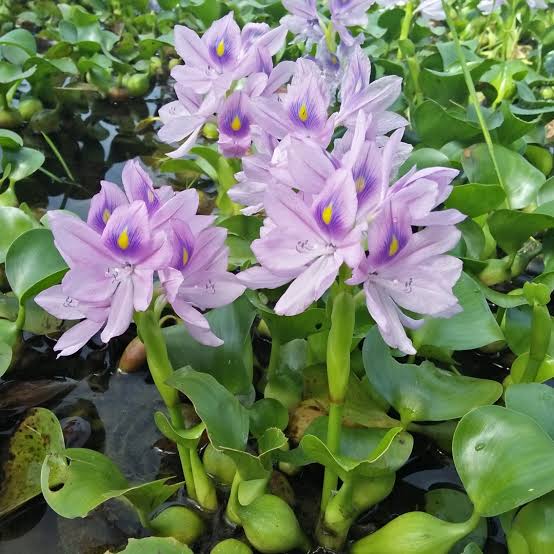
Water hyacinth
Widespread in Southern Vietnam
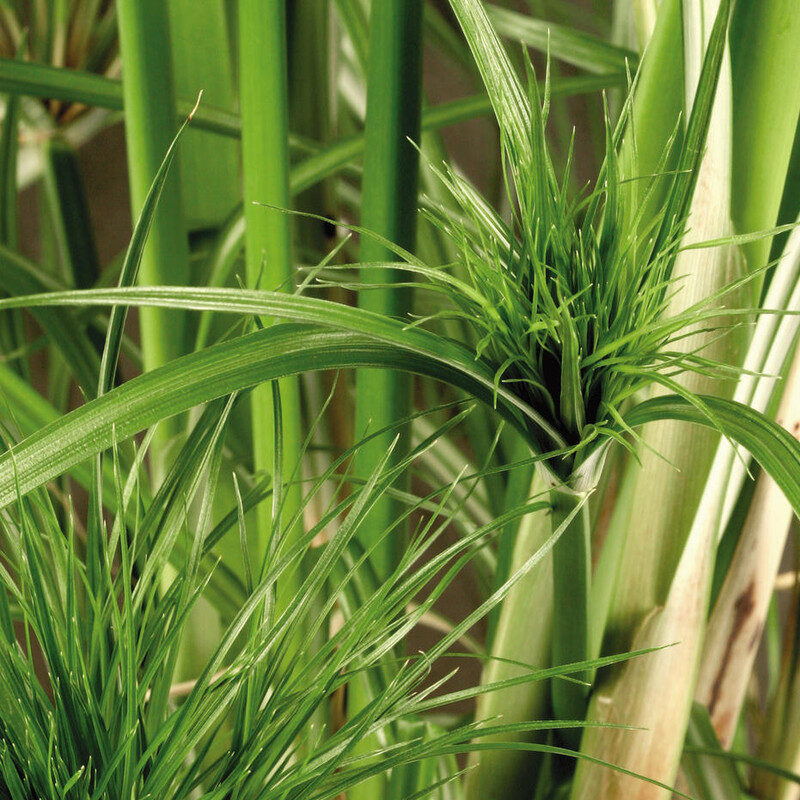
Seagrass
Abundant in Northern Vietnam
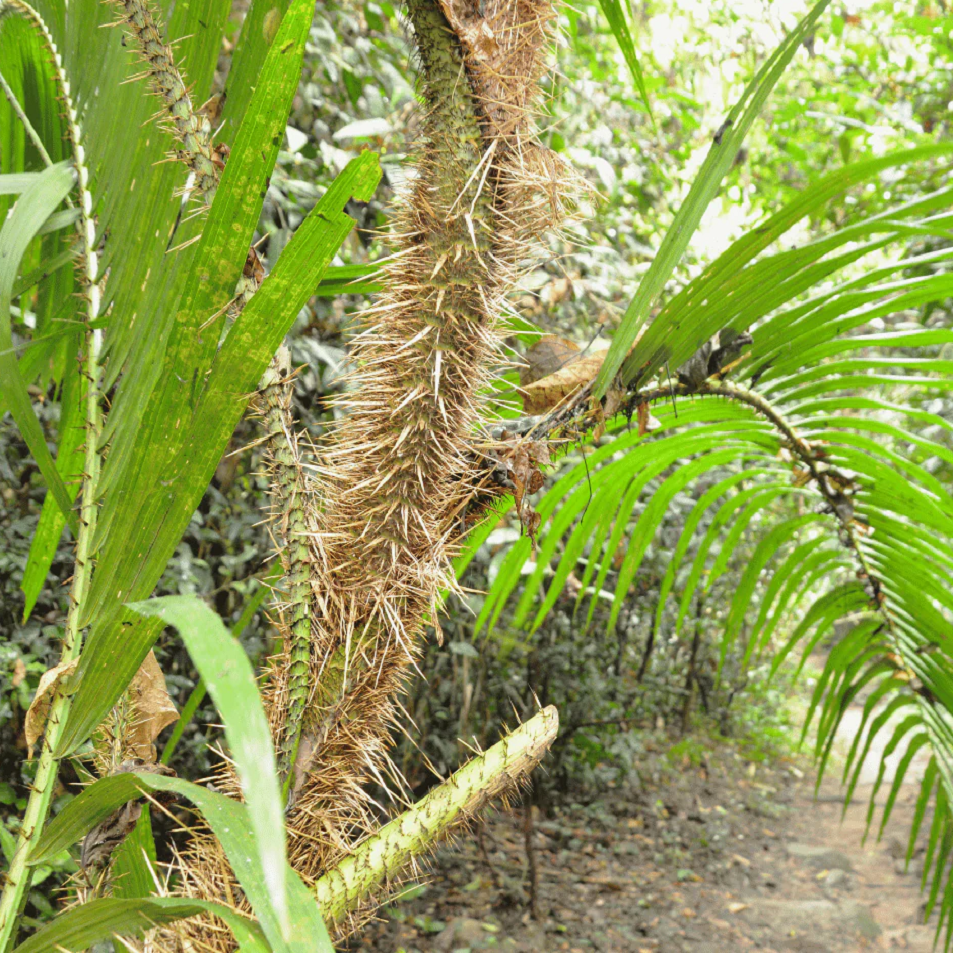
Rattan
Ample in Central Vietnam
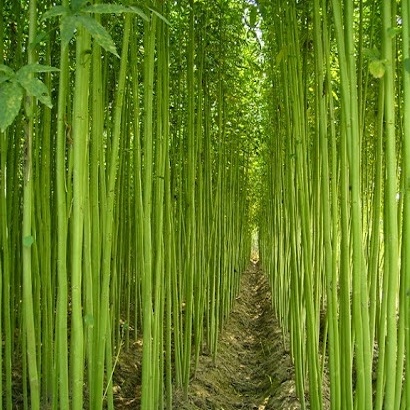
Jute
Scattered in South & North
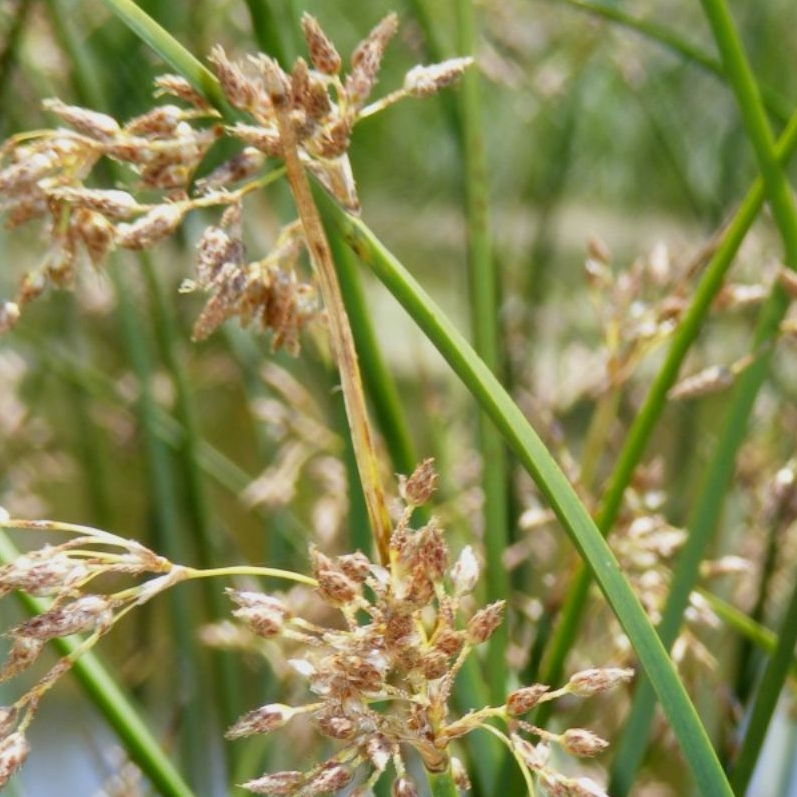
River club-rush
Plenty in Southern Vietnam
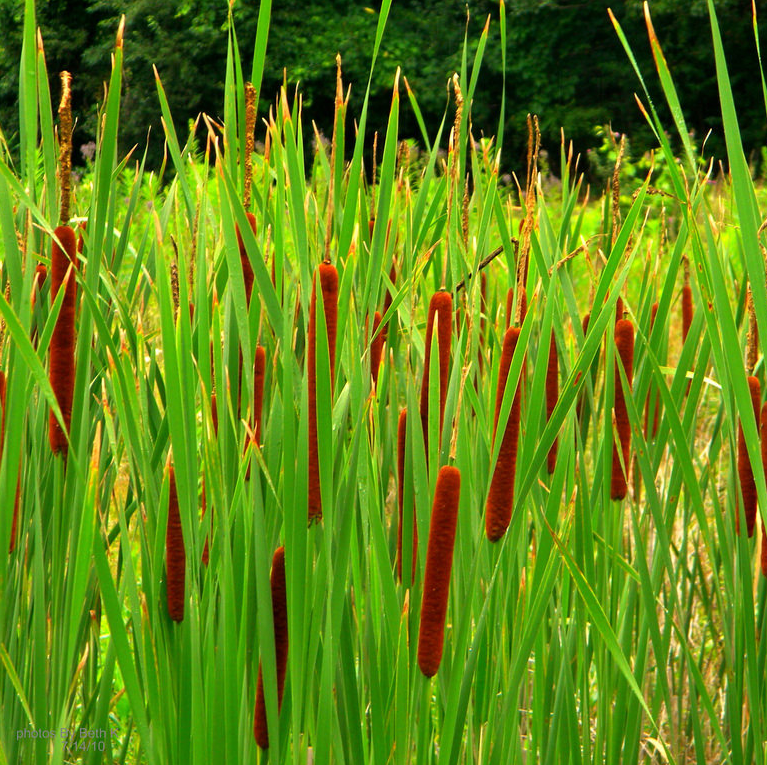
Cattail
Abundant in Mekong Delta

Adopt Controlled Harvesting
We harvest regularly to manage overgrowth and prevent ecological disruption like oxygen depletion in water bodies.

Monitor Post-Harvest Regrowth
We monitor regrowth to maintain ecological balance, and ensure water flow & regenerated materials for next seasons.
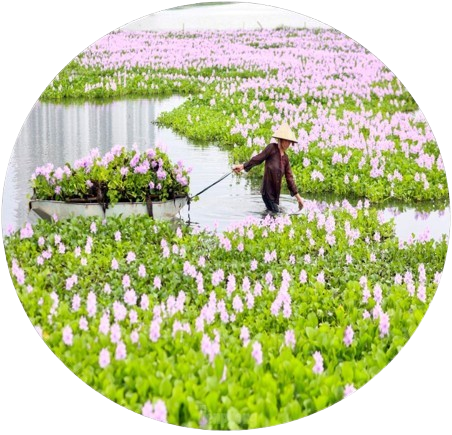

Use Manual or Low-Impact Tools
We mainly adopt manual harvesting or some small-capacity mechanical equipment in peak season; no damage to aquatic ecosystems.

Decentralize Community Processing
We only collaborate with small-scale, community-based craft villages to avoid overexploitation and harsh price competition.
People
We offer opportunities to numerous young, fresh potential graduates who are often deemed unqualified by other organizations. We foster women’s development and prioritize taking on female staff (Female employees account for 80% of our personnel). We care for the people working for us and keep them committed for the long term.
Communities
We work with a large number of farmers and weavers across Vietnam. We respect, treasure, inspire, instruct, and encourage them to work hard to earn a good or stable living. We ensure there is no child or forced labor. We help secure the livelihoods of hundreds of thousands of people across the country, notably in the South. We have built thriving communities of farmers and weavers with diligence and positivity.
Oricraft firmly upholds business ethics with all business partners and customers while embracing integrity among the entire staff, effectively making it one of the Company’s core values.
We maintain proper transparency and accountability with all internal and external parties. We comply with international and local regulations and rules. On the export front, we are fully certified by SGS for the goods to be safe and unharmful to human health. Commonly required tests include: phthalate, flammability,